
















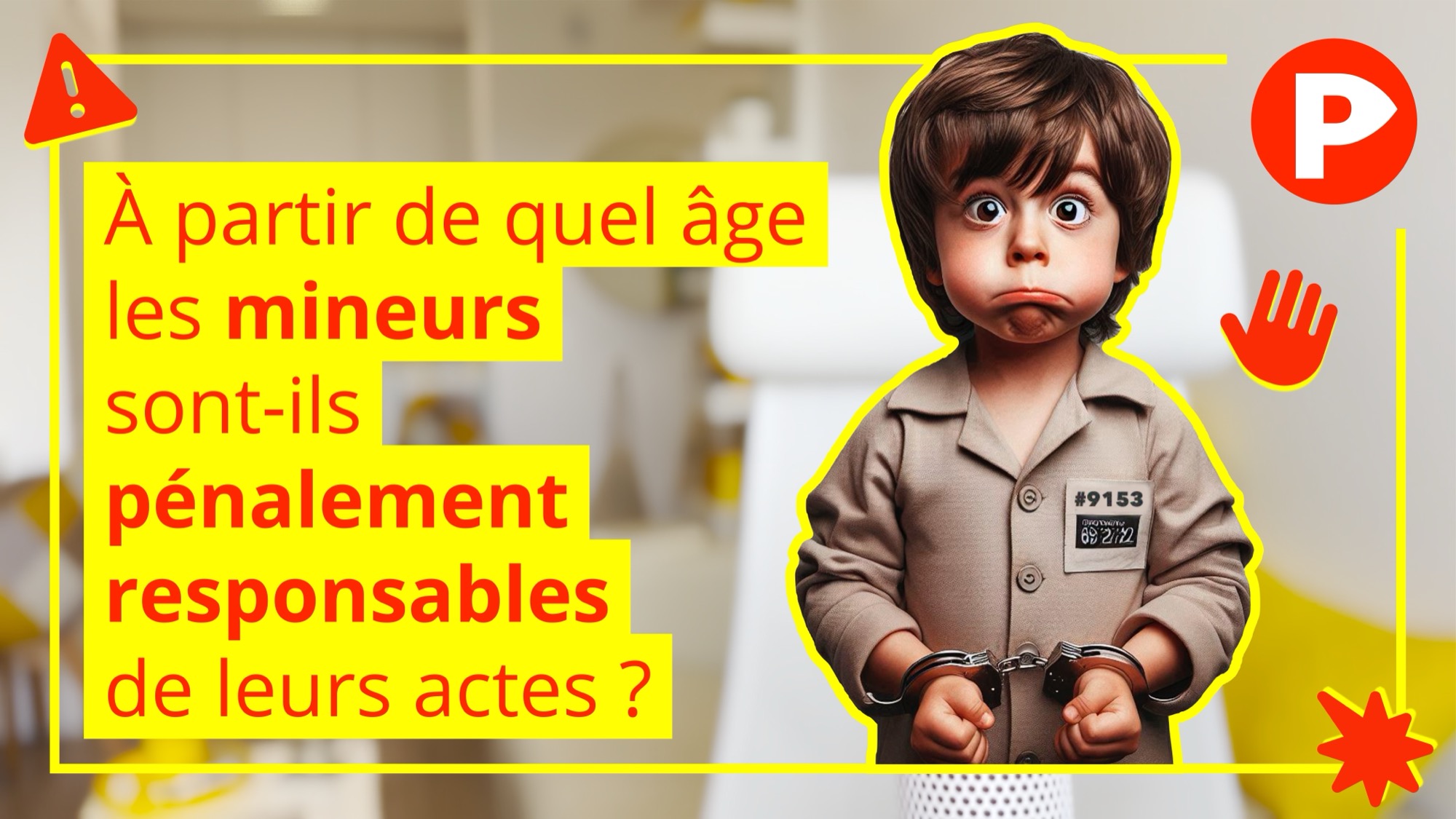
This video explains the age at which minors are criminally responsible for their actions in France and what the concept of discernment actually entails. It reminds viewers that, according to the Juvenile Criminal Justice Code, a minor can be held criminally responsible as soon as they are capable of understanding and intending their actions, as well as grasping the meaning of the legal process.
The law establishes a presumption of lack of discernment for children under 13, and a presumption of discernment from the age of 13. This means that a 13-year-old can be prosecuted and tried for a criminal offense, with penalties adapted to their age, including imprisonment in certain cases. For children under 13, and from the age of 10, the courts can impose educational sanctions, focused on protection, support, education, social integration, and access to healthcare.
The video emphasizes that juvenile justice relies on a balance between educational and criminal responses, but that prevention remains the fundamental issue. Many minors involved in offenses, particularly sexual offenses, were unaware of the illegality of their actions, especially in matters of intimacy and sexuality.
Finally, she emphasizes the importance of early education in law, social rules, and respect for oneself and others, through moral and civic education and education in emotional, relational, and sexual life, from a very young age and with content adapted to children's development. Prevention relies on knowledge of the law, understanding its limits, and educational support before any infraction occurs.